
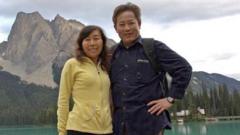
US Scientist Detained in China on Espionage Charges
A US seismologist, Chen Youlin, has been held in China for almost two years on charges of espionage, as reported by his family. Chen, aged 54, was arrested in November 2024 during a visit to Beijing to see family, according to the advocacy group Global Reach. Despite ongoing hopes for his release, Chen's family has spoken out publicly due to the lack of progress in securing his freedom.
Allegations and Family Response
Chen's spouse, Rong Yufang, who is also a seismologist, has refuted the allegations, stating they are "both wrong and inconsistent with the public and collaborative nature of the work that he has done." Chen, who holds US citizenship since 2011, has focused his scientific research on North Korea, a nation closely allied with China and subjected to international sanctions over its nuclear weapons and testing activities. The extent of Chen's work involving China's nuclear program remains unclear.
US intelligence has suggested China's potential development of new nuclear capabilities and secret testing activities, which Beijing has consistently denied. In response to inquiries about Chen's case, a spokesperson from China's foreign ministry stated that cases are handled according to legal procedures, dismissing the notion of "wrongful detention." Under Chinese law, espionage can lead to severe penalties, including life imprisonment or even death.
Concerns for Health and Legal Rights
Rong expressed deep concern for Chen's well-being, emphasizing the lack of communication and his health issues, including diabetes, high blood pressure, and high cholesterol. She noted that Chen has been interrogated over 100 times and was denied legal representation for the first 13 months of his detention. His work, which involved projects funded by the US government, was always conducted transparently and collaboratively with Chinese colleagues.
Chen's research, including a study from December 2020, aimed to enhance nuclear-test monitoring and yield estimation using seismic data from across Asia, including China. Global Reach has highlighted suspicions within the US government that Chen's arrest may be linked to China's possible breach of the Comprehensive Nuclear Test Ban Treaty, suggesting that his expertise could be exploited to counter US seismic detection techniques.
Political Reactions and Diplomatic Implications
The Comprehensive Nuclear Test Ban Treaty seeks to prohibit all nuclear test explosions on Earth. However, several nuclear-capable states, including the US and China, have not yet ratified the treaty, though they have both committed to voluntary moratoriums on explosive tests.
In 2020, during Donald Trump's presidency, accusations were made against China for allegedly conducting covert nuclear tests at the Lop Nur site, claims which Beijing dismissed as baseless and politically motivated.
The Foley Foundation, another advocacy group, has emphasized Chen's health concerns, stressing the importance of reliable access to medical care, which is not available under his current detention conditions. US Senator Edward Markey has criticized China's handling of Chen's case, suggesting it undermines US-China academic collaboration and could deter future engagements. He expressed hope that increased international attention might prompt Chen's release.
Chen's case follows the recent detention of another US scholar, Min Zin, in China, accused of espionage and posing a threat to national security.
Source: Original Article