
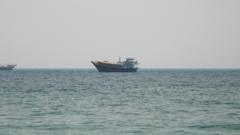
Strait of Hormuz: A Pivotal Issue in US-Iran Relations
The recent tentative agreement between the United States and Iran, signed last month to avoid further conflict, is now under significant strain, with tensions escalating once more. This fragile peace agreement, often described as "no war, no peace," is being tested by ongoing disputes, particularly concerning the control of the Strait of Hormuz. The strait, a vital maritime corridor for global oil and gas supplies, has emerged as a key point of contention.
Iran's Red Line
Iran has made it abundantly clear that its control over the Strait of Hormuz is non-negotiable. Mohammad Bagher Ghalibaf, Iran's chief negotiator, recently reiterated Tehran's stance on social media, emphasizing that the agreement's terms should be honored. The deal, a memorandum of understanding hastily drafted in June, has left both parties with differing interpretations. While Iran perceives the agreement as granting it control over the strait's management, the United States insists on the uninterrupted flow of essential commodities through this critical route.
Interpreting the Agreement
The memorandum's vague language, particularly in point five, is at the heart of the disagreement. This section states that Iran should use its best efforts to ensure the safe passage of commercial vessels. Tehran interprets this as a green light for control, whereas Washington views it as a mandate for free passage. This discrepancy has further complicated the situation, with regional stakeholders expressing concern over Iran's intentions.
Regional Tensions and Diplomatic Efforts
Amidst these tensions, there are signs of internal divisions within Iran's leadership. Some factions advocate for leveraging military gains through diplomacy, while others believe the ceasefire was premature. Recent Iranian attacks on vessels, including a Qatari-flagged tanker, have been attributed to a "rogue unit" of the Islamic Revolutionary Guard Corps (IRGC), exacerbating regional anxieties.
Iran's parliament has introduced new legislation to manage the strait, reinforcing its claim to control this strategic waterway. Ebrahim Azizi, head of Iran's national security commission, has described control over the strait as an "inalienable right," further entrenching Tehran's position.
Impact on Regional Dynamics
Iran's assertive stance has not only strained relations with the United States but also with neighboring countries. Qatar and Oman, both significant mediators in the crisis, are particularly concerned about Iran's plans to charge "service fees" for passage through the strait. Oman, traditionally a discreet diplomatic player, finds itself in a challenging position, balancing its longstanding neutrality with increased pressure from both Tehran and Washington.
Prospects for Resolution
Despite the ongoing tensions, there remains a slim possibility for compromise. Some experts suggest that a resolution could involve allowing Iran to maintain a semblance of authority without imposing tolls on passing ships. Former British diplomat Simon Gass highlights the potential for a solution that satisfies both parties without setting a dangerous precedent.
However, fundamental misunderstandings between the US and Iran continue to hinder progress. Both nations believe they hold the upper hand, expecting the other to concede first. Iran's resilience in the face of adversity, combined with its strategic moves, has allowed it to partially circumvent sanctions. Yet, the country's economic challenges, exacerbated by inflation and unrest, reveal the limits of its current strategy.
The Way Forward
President Trump, facing his own political and economic challenges, may eventually return to negotiations. However, the focus on the Strait of Hormuz has overshadowed critical discussions about Iran's nuclear program. The memorandum's 60-day timeframe for intensive talks appears increasingly unrealistic, adding another layer of complexity to the situation.
Robert Malley of the International Crisis Group remains cautiously optimistic about the truce's potential to endure in some form. He acknowledges the dysfunction on both sides but suggests that neither party can fully achieve its goals without compromise.
Source: Original Article